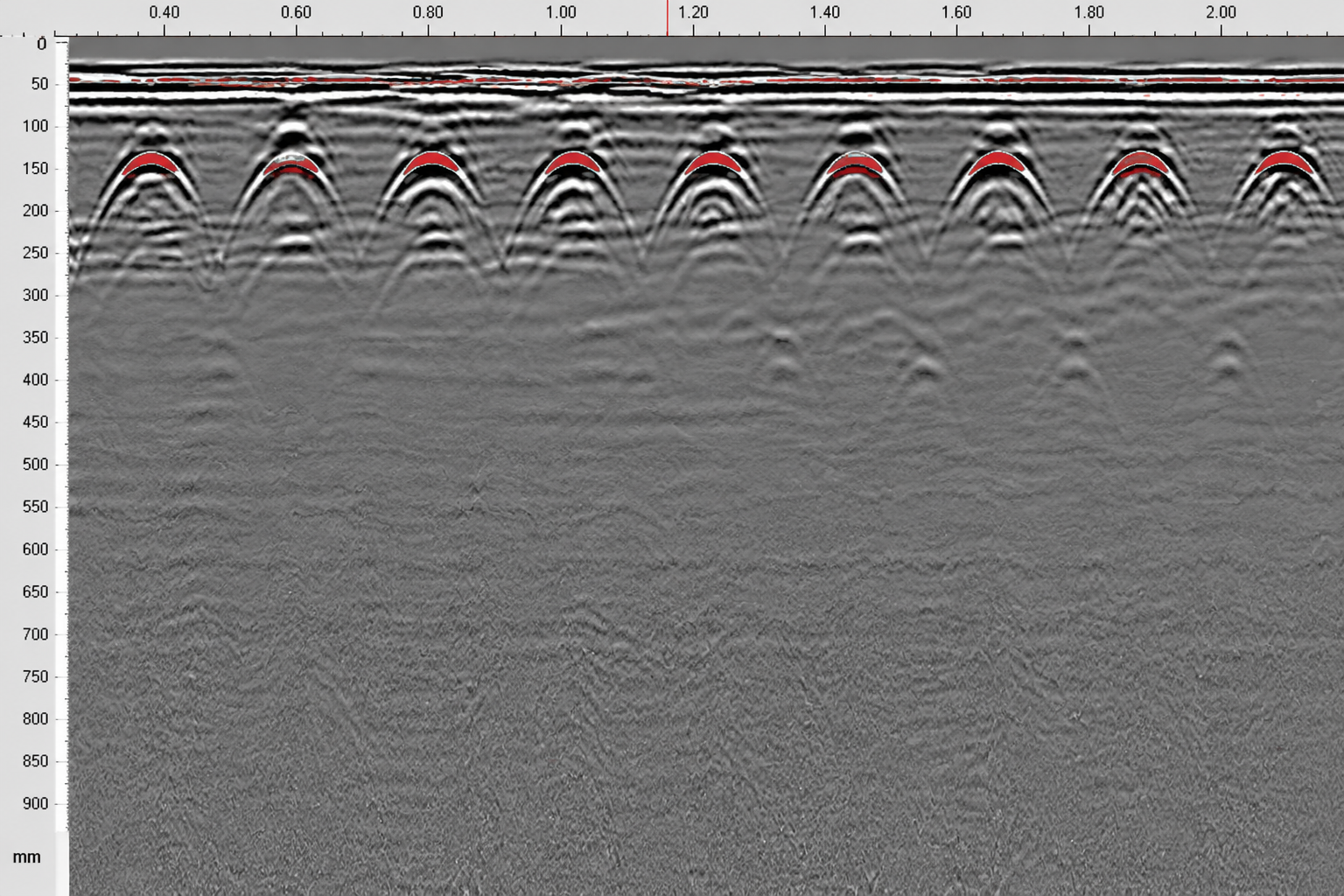
PT Cable Investigation
GPR surveys used to investigate detectable linear features consistent with post-tensioning within concrete slabs and structural elements.
Before Drilling & Coring
Targeted scanning around proposed drilling, fixing and core locations before intrusive works begin.
Reinforcement Mapping
Investigation of reinforcement position, direction and approximate spacing within selected concrete areas.
Survey Reporting
Site mark-ups, annotated photographs, processed survey information and technical reports available where required.
GET IN TOUCH
Request a Free Quote
If post-tensioned concrete is known or suspected within the proposed working area, Magnitude Geo can undertake a targeted GPR survey before drilling, coring, cutting or structural alteration works.
Send us drawings, photographs and marked-up locations showing the proposed intrusive works wherever possible.
The more information available regarding the structure, proposed penetration locations and known post-tensioning system, the better we can define the appropriate survey coverage.
Our team can review your project information and provide a free, no-obligation quotation.
Why Locate Post-Tension Cables Before Drilling?
Post-tensioned concrete contains high-strength steel tendons that form an important part of the structural system. Their position may not be obvious from the finished concrete surface.
Before drilling, coring or cutting into a post-tensioned slab, an appropriate investigation can provide valuable information regarding detectable tendon routes, reinforcement and other embedded features within the proposed working area.
Investigation around proposed core hole and penetration locations.
Targeted scanning before installing fixings into post-tensioned concrete.
Survey support before forming openings or cutting structural slabs.
Investigation for refurbishment and modification of existing PT structures.
GPR for Post-Tension Cable Detection
Ground Penetrating Radar is a non-destructive investigation method commonly used to assess reinforced and post-tensioned concrete structures.
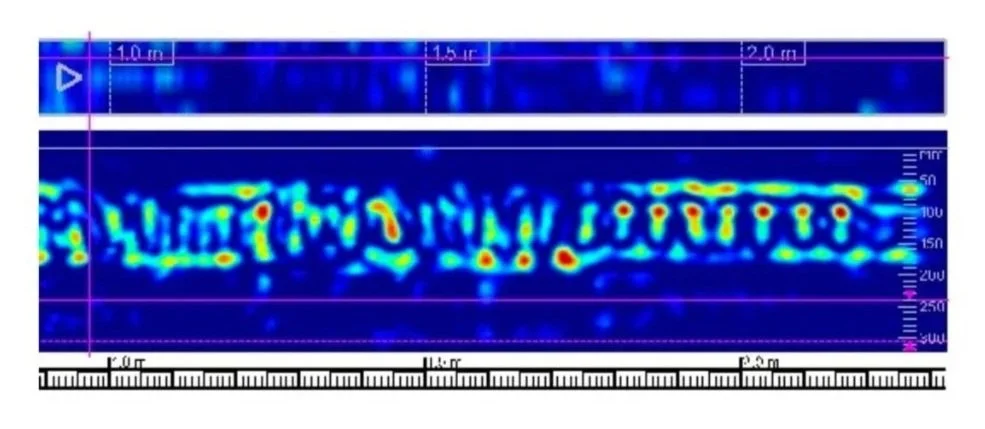
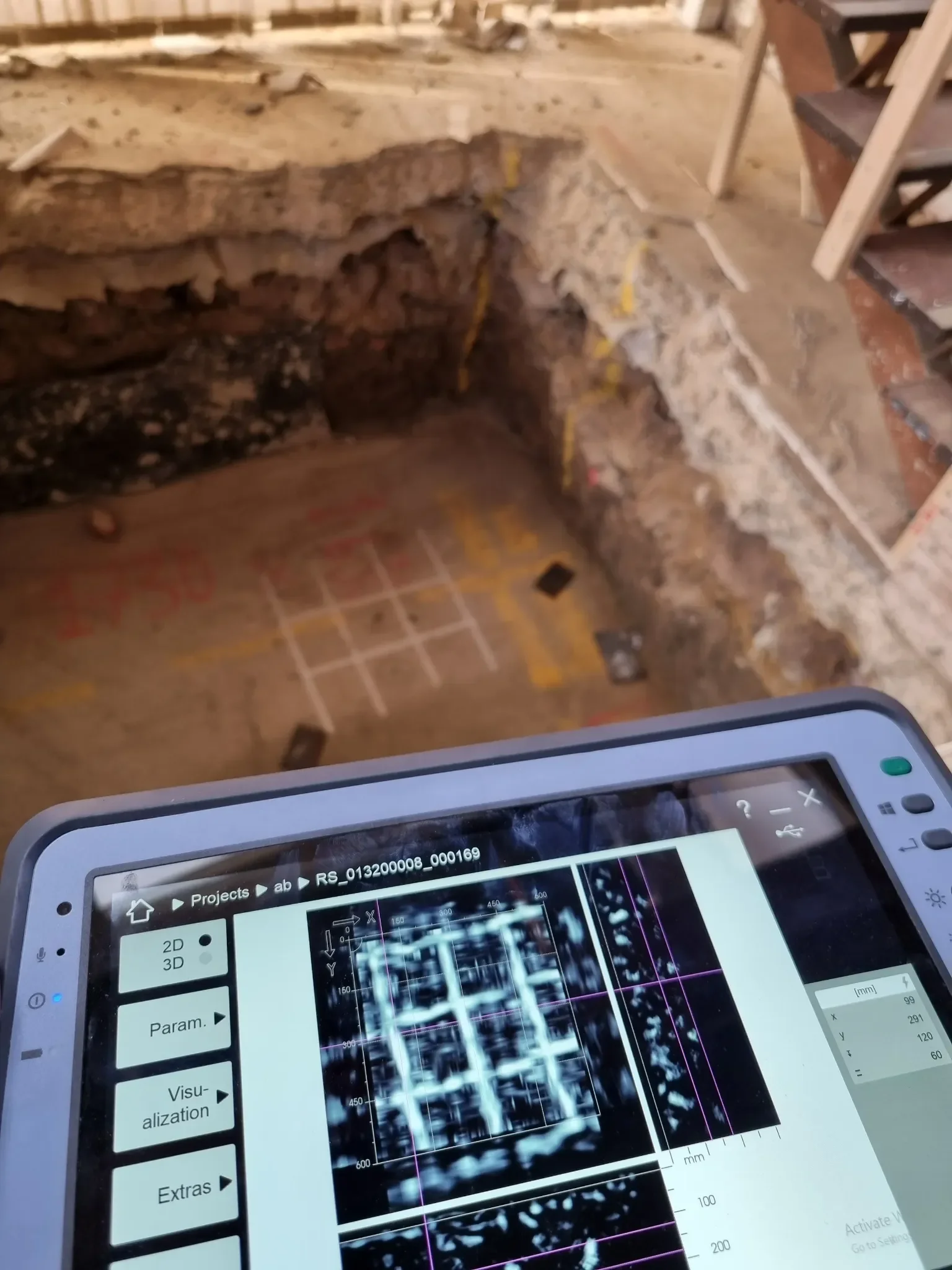
Radar data is collected across the concrete surface using controlled survey grids. Reflections within the data are interpreted to investigate reinforcement and linear features that may be associated with post-tensioning systems.
The effectiveness of the survey depends on factors including concrete composition, reinforcement congestion, tendon depth, slab thickness, access and the configuration of the post-tensioning system.
Learn more about our GPR Survey London service.
Investigating Post-Tension Tendon Routes
Post-tension tendons may follow straight, curved or profiled routes through a concrete slab depending on the structural design.
GPR survey grids can be positioned across the proposed working area to investigate patterns and linear responses within the concrete.
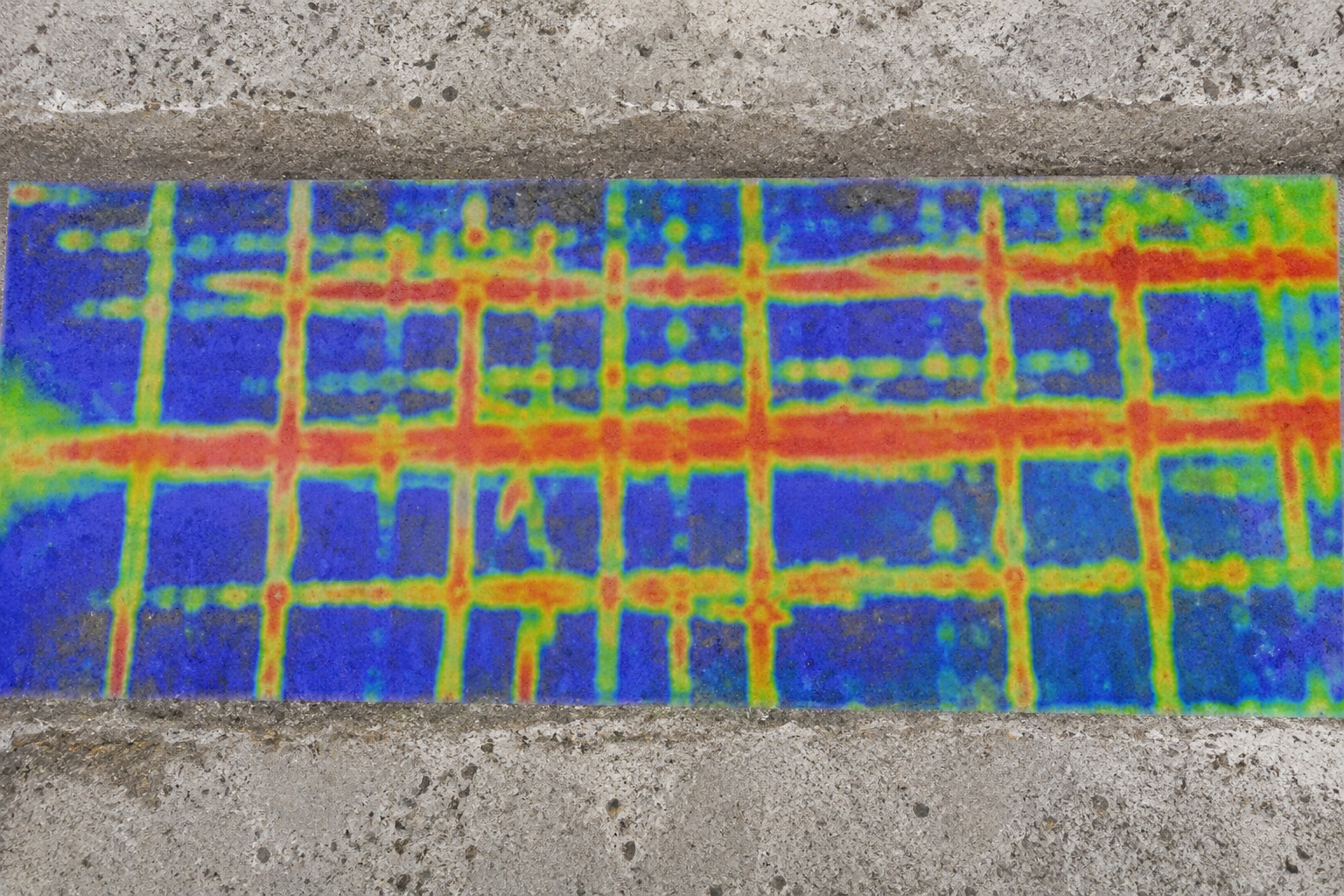
Where responses are sufficiently clear, interpreted tendon routes and reinforcement positions can be marked onto the accessible concrete surface to assist with planning proposed works.
Survey interpretation should always be considered alongside available structural drawings and other project information.
Scanning Before Drilling, Coring & Cutting
Targeted GPR scanning can be undertaken around proposed intrusive work locations before drilling or cutting into a post-tensioned concrete slab.
The survey area should extend beyond the immediate proposed penetration so that surrounding reinforcement patterns and detectable linear features can be interpreted within context.
Typical applications include:
- Diamond core drilling
- Service penetrations
- Mechanical and electrical installations
- Resin and mechanical fixings
- Structural openings
- Concrete cutting
- New drainage and service routes
- Refurbishment works
Post-Tensioning & Reinforcement Investigation
Post-tensioned slabs can also contain conventional reinforcement including reinforcing bars and mesh.
During a GPR investigation, responses associated with reinforcement may also be identified alongside features potentially associated with the post-tensioning system.
Understanding the wider reinforcement arrangement can improve interpretation of the survey area, particularly where several layers or types of embedded steel are present.
For dedicated reinforcement investigations, visit our Reinforcement Survey London service.
Post-Tensioned Structures We Can Investigate
GPR surveys can be undertaken across a variety of accessible post-tensioned concrete structures depending on site conditions and project requirements.
Floor Slabs
Targeted investigations before drilling, coring, service penetrations and alterations.
Transfer Slabs
Survey support where major structural slabs require investigation before intrusive works.
Roof Slabs
Investigation of accessible roof structures before new penetrations or installation works.
Concrete Soffits
Scanning from the underside where the upper surface of the slab cannot be accessed.
Post-Tension Investigation from Concrete Soffits
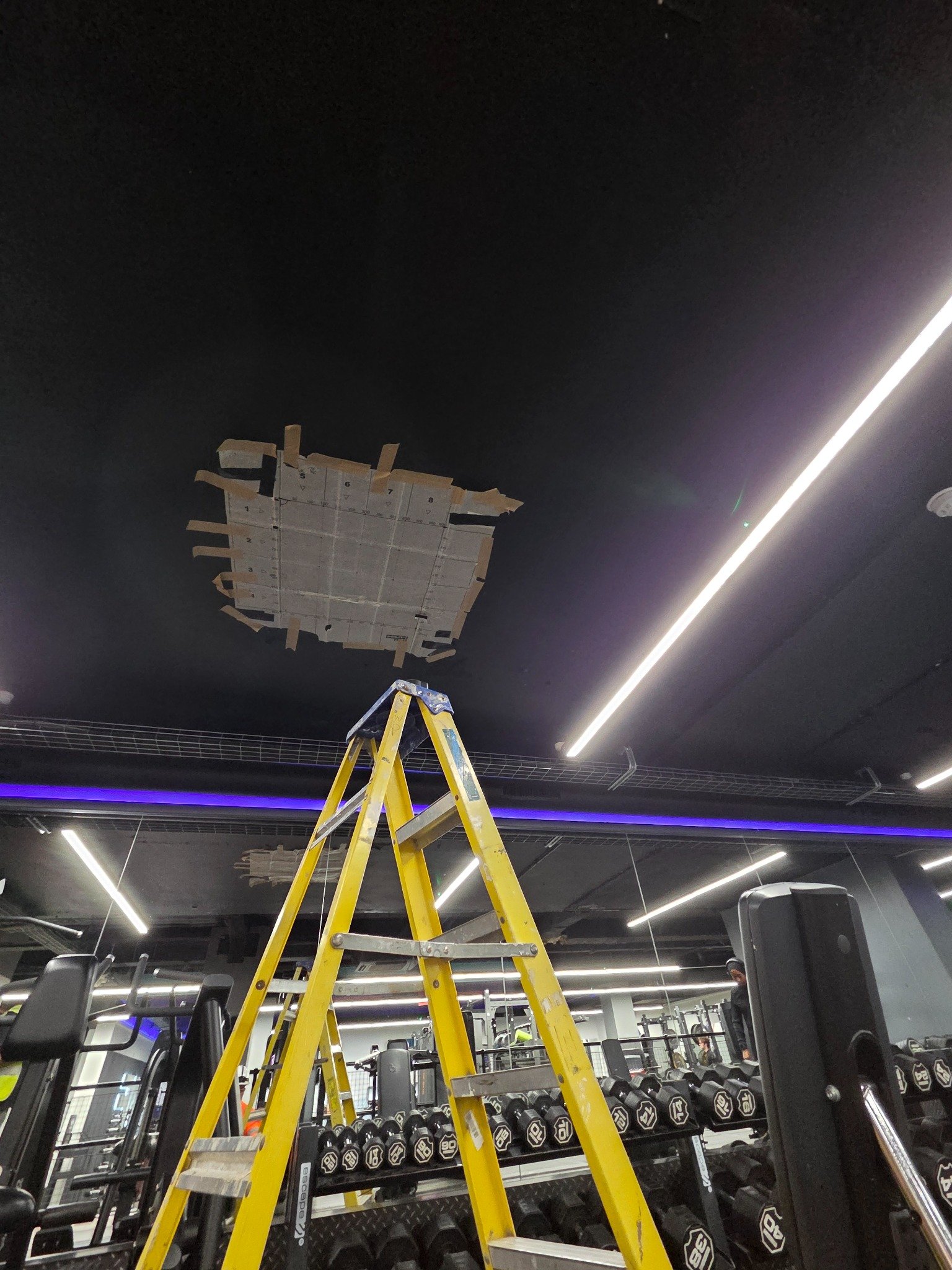
Where the upper surface of a slab is inaccessible, survey work may be possible from the underside or soffit of the concrete structure.
This can be useful within basements, car parks, commercial buildings and occupied premises where access from above is restricted.
The suitability of soffit scanning depends on access, surface condition and the structural arrangement of the slab.
Where required, survey grids and interpreted features can be marked onto the accessible soffit surface.
Post-Tension Surveys for Structural Engineers
Structural engineers may require additional information regarding an existing post-tensioned structure before approving alterations, penetrations or refurbishment works.
Magnitude Geo can undertake targeted GPR survey areas based on engineer-specified locations or proposed construction works.
Available drawings, tendon layouts and structural information should be provided wherever possible and can be considered alongside the site survey findings.
For broader concrete investigations, see our Slab Scanning London service.
Post-Tension Survey Deliverables
Survey outputs can be tailored to the scale and requirements of the project. Targeted surveys may require physical site mark-ups, while larger investigations can include processed survey information and formal reporting.
Who Uses Post-Tension Cable Detection Surveys?
Structural Engineers
Investigation of existing PT structures before proposed alterations, openings and structural works.
Diamond Drillers
Targeted surveys around proposed core drilling and penetration locations.
Main Contractors
GPR investigations during refurbishment, fit-out and construction works involving post-tensioned slabs.
Building Services Contractors
Survey support before installing new services, penetrations and fixings through existing concrete structures.
Post-Tension Cable Detection Across London
Magnitude Geo provides post-tension concrete investigation services throughout Central London, North London, South London, East London and West London.
We support commercial buildings, residential developments, offices, hotels, basements, retail premises and refurbishment projects involving existing post-tensioned concrete structures.
Our survey coverage also extends across Surrey, Kent, Essex, Hertfordshire, Buckinghamshire, Berkshire and the wider South East.
Post-Tension Cable Detection FAQs
What is post-tension cable detection?
Post-tension cable detection is an investigation undertaken to identify detectable tendon routes and other embedded features within post-tensioned concrete before intrusive works are carried out.
Can GPR detect post-tension cables?
GPR can assist with identifying linear responses and patterns that may be consistent with post-tension tendons. Survey effectiveness depends on the concrete construction, tendon depth, reinforcement congestion and site conditions.
Should a PT slab be scanned before drilling?
Where post-tensioning is known or suspected, an appropriate investigation should be considered before drilling, coring or cutting so that available structural information and survey findings can be reviewed before intrusive works proceed.
Can you scan before core drilling?
Yes. Magnitude Geo can undertake targeted GPR scanning around proposed core drilling locations within accessible concrete surfaces.
Can you mark PT cable locations on the concrete?
Where interpreted responses are sufficiently clear, relevant detected features can be marked onto the accessible concrete surface as part of the survey.
Can you scan from the underside of a slab?
Yes. Where access and surface conditions allow, GPR investigation may be undertaken from a concrete soffit or underside.
Can GPR distinguish reinforcement from post-tension tendons?
Interpretation is based on the observed radar responses, their pattern, geometry, depth and available structural information. Dense reinforcement and complex slab construction can make individual features more difficult to distinguish.
Do you provide a survey report?
Yes. Depending on the agreed scope, deliverables can include annotated photographs, survey mark-ups, processed GPR information, technical reports and CAD drawings.
How much does post-tension cable detection cost?
The cost depends on the number and size of survey areas, site location, access, structural complexity and reporting requirements. Send Magnitude Geo drawings and photographs for a project-specific quotation.
Related Concrete Scanning Services
Explore our specialist concrete scanning and reinforcement investigation services across London and the South East.
Specialist concrete investigation services. Slab Scanning London
GPR scanning of concrete slabs. GPR Survey London
Ground Penetrating Radar surveys. Rebar Detection London
Locate reinforcing steel within concrete. Reinforcement Surveys
Detailed reinforcement investigations. Ferroscan Surveys
Rebar mapping and reinforcement surveys.